

Users embarking on the digital aisles of online shopping carry a set of expectations molded by years of in-person retail experiences. In the world of user-centered design, understanding these mental models is vital. For instance, the online shopping cart – something you’d likely use in a brick-and-mortar store – how does its virtual counterpart align with real-life expectations? Here, we’ll discuss the concept of mental models in relation to online shopping and analyze the balance between familiarity, innovation, and seamless user experiences.
Aligning Real and Virtual Experiences
A mental model is a preconceived set of beliefs about a system based on previous knowledge and experience (Nielsen & Chan, 2024). This means that in the conversion from physical to digital retail, designers must parallel the user expectations of a traditional store in order to avoid confusion in the online space. In real life, the shopper controls what goes into their cart, and this mental model tells them that they should easily be able do the same task on a website. The challenge is recreating this pattern in a way that doesn’t disrupt what would typically be a simple and tangible task in a physical setting.
Mental models, when clearly communicated in the design of the system, should bridge the gap between user expectations and digital innovation. It’s about integrating familiar elements for an effortless experience. This alignment gives the user a sense of comfort and confidence not only in their online journey, but also in their decision-making.
Next, we’ll explore specific elements that play a crucial role in user-centered design.
Visual Reminders
In the design landscape of online retail, visual reminders support different stages of action that attempt to mimic in-person shopping experiences (Rogers et al., 2017, p. 120). The shopping cart icon serves as a universally recognized equivalent that directs users from browsing to checkout. Similarly, the search bar functions as a virtual sales associate, helping to guide users between the numerous digital aisles. While oftentimes helpful, there is a distinct balance between assistance and potential distraction.
Princess Polly, a popular online retailer, is a prime example of this concept. Their search bar, though precise, displays an auto-populated range of products even before you begin typing. This can lead to frustration among users whose initial intentions are impaired by distracting design elements.
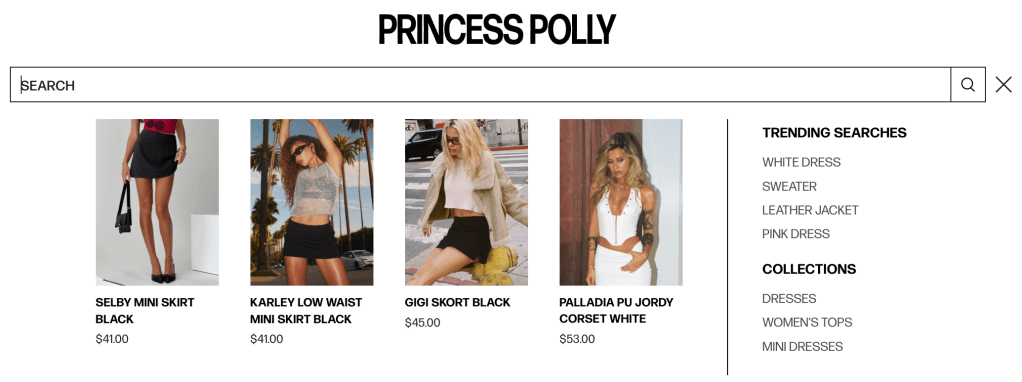
The auto-populated recommendations that appear once you click on the search bar
UX designers must tread carefully, ensuring that visual reminders aim to help the user and confirm their expectations instead of overwhelming their experience. The most innovative and thoughtful interfaces of online retailers use mental models as the foundation for design standards, thus creating the most seamless shopping experience centered around their users (Nielsen & Chan, 2024).
Conclusion
With mental models at the forefront of innovation, online retail thrives when designers use familiarity to build their virtual storefronts. The shopping cart is proof that user-centered design truly works, and the search bar shows us where further research and refinement is needed. As UX and UCD become more widely talked about, we can hope to see improvements that give users a seat at the decision-making table with the goal of making the online shopping experience feel like we never left the brick-and-mortar store… but even better.
Works Cited
Nielsen, J., & Chan, M. (2024, January 26). Mental models and user experience design. Nielsen Norman Group. https://www.nngroup.com/articles/mental-models/
Rogers, Y., Preece, J., & Sharp, H. (2017). Interaction design (5th ed.). Wiley.
 Hana Lataille
Leave a comment