via Amy Stone
When faced with similar products, have you ever noticed yourself gravitating towards one because of the colors on the packaging?
Our brains are constantly processing these visual cues, and color plays a powerful role in how we perceive brands. It’s a psychological tool that can make or break a buyer’s evaluation of a company and its product.
Take Veuve Clicquot, for example, whose signature yellow label has become synonymous with luxury and celebration. How did this perception come to be? The answer lies in the science of color psychology.
What is color psychology?
Color psychology explores how colors, through their various hues, tints, shades, and tones, bring up distinct associations that affect human emotion and decision-making (Maybray). Of course, other factors such as personal preference and culture have an impact on this as well.
When in comes to branding, color isn’t just an aesthetic choice, it’s a strategic tool. As mentioned before, colors can influence how buyers perceive, and therefore interact with, your company and product. This makes it crucial to choose ones that align with your business goals and target audience.
Color association and symbolism
via Serena Archetti, The Meaning of Colors: How To Use Colors in Your Art
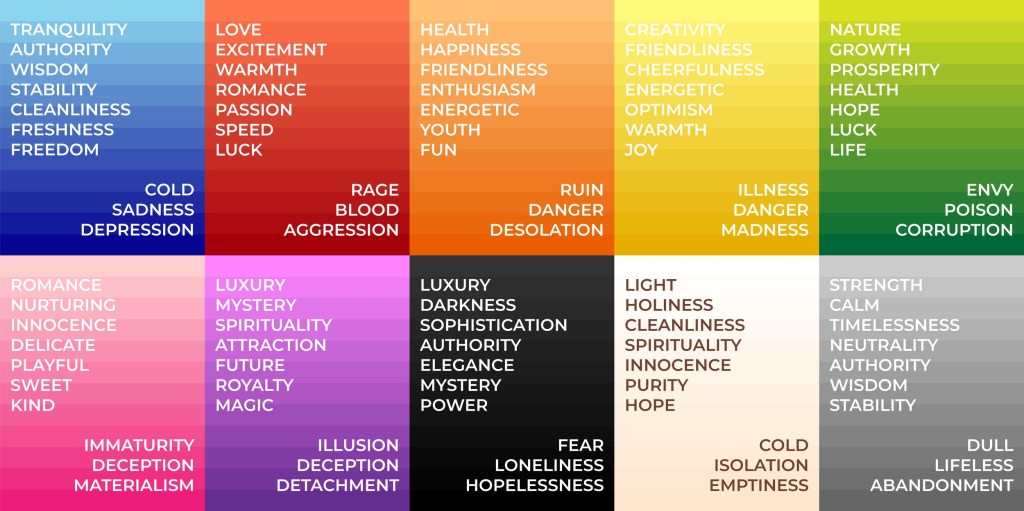
Colors whisper a secret language. Beyond their visual impact, they can trigger emotions, memories, and even cultural associations. This is color symbolism. As humans, we attach unique meanings to different colors, whether positive or negative. The most common values associated with color are shown in the chart above.
For example, in Western cultures, red might symbolize danger, whereas in China, it represents good luck (Caldwell).
Ever felt a sense of serenity gazing out over the blue ocean or invigorated by a vibrant green forest? That’s the symbolism in color psychology at play!
Veuve Yellow, or Pantone 137 C

Veuve’s signature color used for their Brut Yellow Label champagne.
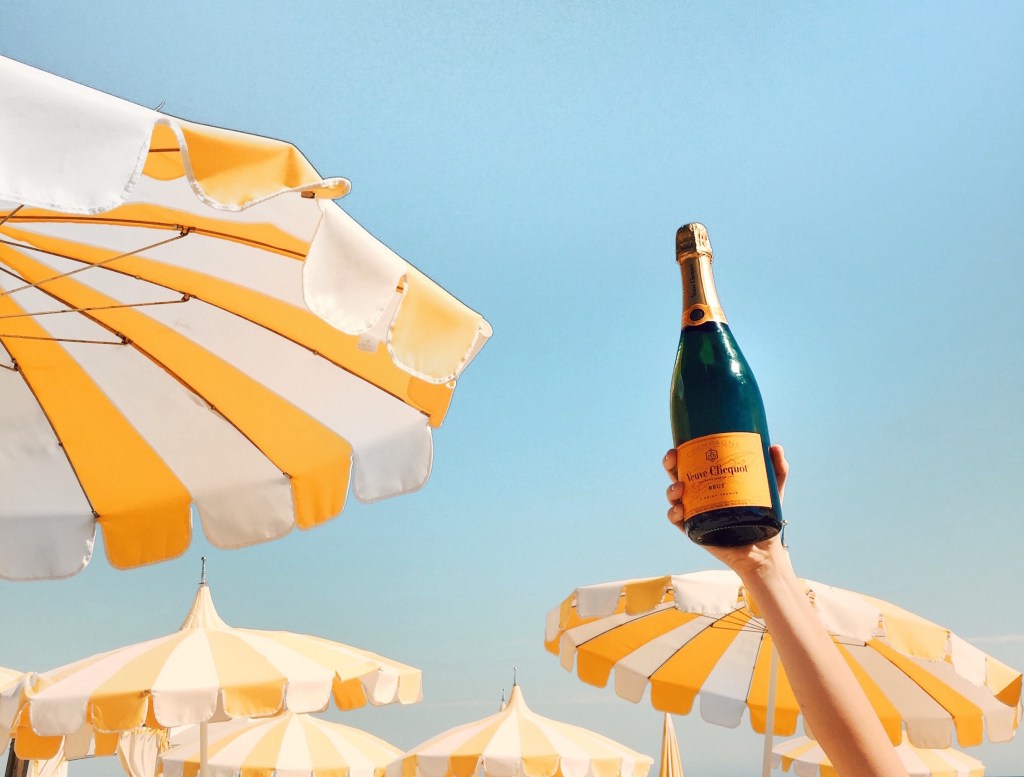
Veuve Clicquot’s bold yellow label is a beacon in the liquor store. You don’t even need to read the name, the color alone speaks volumes. This goes to show how well the company has leveraged color psychology in their marketing strategies.
“For two-and-a-half centuries, Veuve Clicquot has represented a profound state of optimism and solaire culture, starting with Madame Clicquot’s belief that each new day opens a path to brighter futures.”
CMO Carole Bildé in her 2022 interview with Marketing Dive
This color choice isn’t random, it perfectly aligns with Veuve Clicquot’s brand identity. Yellow is known to evoke feelings of joy and positivity, and the gold hue adds a layer of extravagance – the perfect representation for a luxury champagne brand.
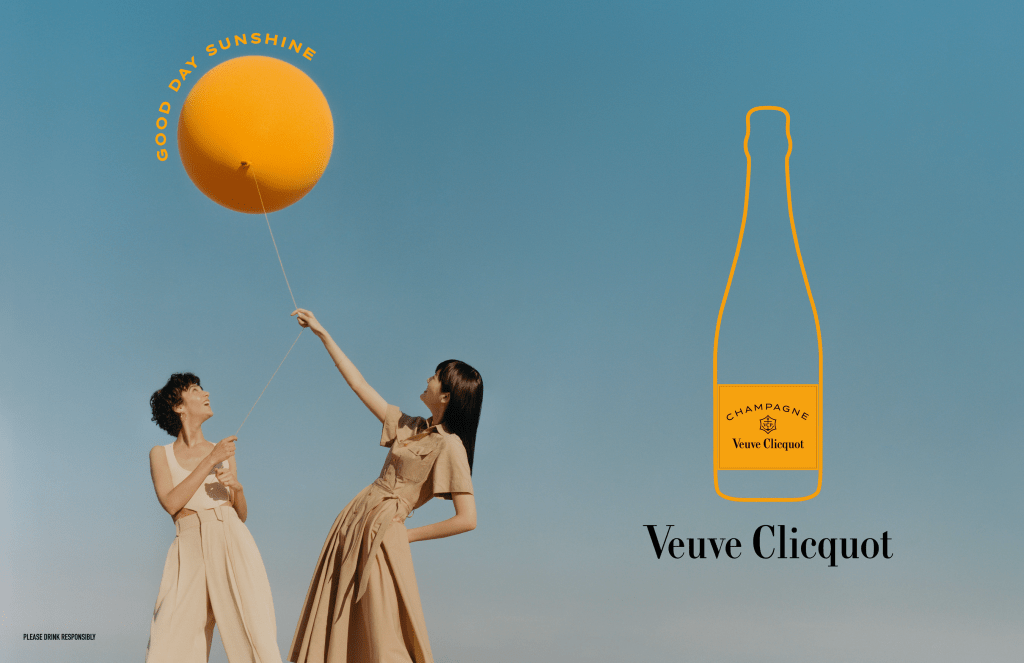
Image used in Veuve’s 2022 Good Day Sunshine campaign to celebrate the brand’s 250th anniversary.
By understanding the power of color psychology, brands like Veuve Clicquot can create a visual language that resonates with their target audience, ultimately influencing purchasing decisions and building brand loyalty.
Next time you find yourself stuck between two similar products, ask yourself who really wears the pants in this shopping situation – you, or the colors staring back at you from the shelf.
Works Cited
Caldwell, Cath. Graphic Design for Everyone. London ; New York, Dorling Kindersley Limited, 2019.
Koltun, Natalie. “Campaign Trail: Veuve Clicquot Savors Small Moments and 250 Years.” Marketing Dive, 22 Apr. 2022, www.marketingdive.com/news/campaign-trail-veuve-clicquot-luxury-champagne-beatles/622456/. Accessed 6 Apr. 2024.
Maybray, Bailey. “Color Psychology: How to Use It in Marketing and Branding.” HubSpot, 11 Aug. 2023, blog.hubspot.com/the-hustle/psychology-of-color. Accessed 6 Apr. 2024.
 Hana Lataille
Leave a comment