
LinkedIn has solidified itself as the go-to platform for professionals, offering networking opportunities, job postings, and industry insights. For marketers, it’s an essential tool for reaching business-minded audiences, allowing targeted advertising based on user data. However, as with many social media platforms, LinkedIn’s reliance on data collection raises concerns about privacy, transparency, and ethical marketing.
While leveraging user data allows for effective marketing strategies, it also introduces critical questions: How much data does LinkedIn collect? How is it used? And most importantly, do users have enough control over their own information? These concerns have become even more pressing with LinkedIn’s recent controversies surrounding artificial intelligence (AI) training and data privacy.
LinkedIn’s Data Collection Policies
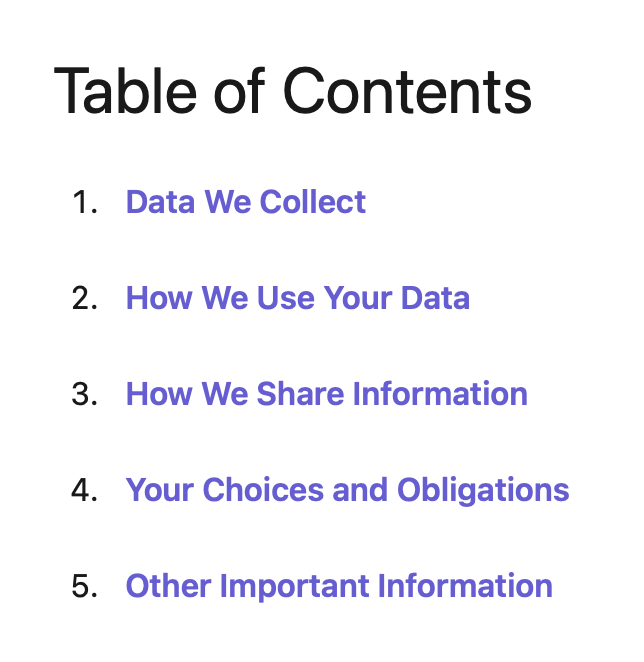
Breakdown of LinkedIn’s privacy policy
Like most social platforms, LinkedIn gathers and processes various types of user data. According to its privacy policy, LinkedIn collects:
- Profile Information: Details users voluntarily provide, such as name, job title, industry, and skills.
- Behavioral Data: Information on engagement, including posts liked, shared, or commented on.
- Device and Location Data: IP addresses, device IDs, and approximate geographic locations.
- Third-Party Data: Information obtained from advertisers and data brokers to enhance targeting.
In addition, LinkedIn’s cookie policy reveals that the platform uses tracking technologies to monitor user activity across the web, even when users aren’t actively on LinkedIn. This means interactions with other websites and services can still contribute to a user’s profile and inform ad targeting strategies.
While LinkedIn allows users to adjust some privacy settings, much of this data collection happens by default. Many users remain unaware of the extent to which their activity is tracked and utilized for marketing and AI development.
Privacy Concerns and Controversies
LinkedIn has faced increasing scrutiny over how it handles user data, particularly regarding AI training. A lawsuit filed in early 2025 alleges that LinkedIn used customer data – including user posts, job applications, and even private messages – to train AI models without explicit consent (Reuters).
This revelation sparked backlash, as it suggests that LinkedIn may have scraped user data before updating its terms of service (TechCrunch). In addition, reports indicate that LinkedIn allegedly used private messages for AI training purposes, raising serious privacy concerns (The Register).
These allegations highlight a broader issue in social media privacy: the fine print of terms and conditions often leaves users unaware of how their data is truly being used. While LinkedIn argues that its policies align with standard industry practices, the controversy underscores a growing need for greater transparency in how platforms manage user data.
Transparency and Consumer Protections
To address privacy concerns, LinkedIn must comply with key data protection regulations such as the General Data Protection Regulation (GDPR) and the California Consumer Privacy Act (CCPA).
Understanding GDPR and CCPA
- GDPR: Enforces strict guidelines on data collection, requiring explicit user consent, the right to access and delete personal data, and data minimization principles.
- CCPA: Grants California residents the right to know what personal data is collected, opt out of data sales, and request data deletion.
LinkedIn claims to adhere to both regulations, with privacy disclosures available in its California privacy notice and a GDPR compliance guide. However, the platform’s data collection practices – particularly around AI training – have raised concerns about whether these policies truly align with GDPR and CCPA principles.
For example, GDPR requires clear, informed consent before using personal data for purposes like AI model training. If LinkedIn collected and used data before updating its terms, as reports suggest, it may not be fully compliant. Similarly, while CCPA allows users to opt out of data sales, LinkedIn’s extensive ad-targeting network raises questions about how effectively these opt-out mechanisms function.
Recommended Improvements for LinkedIn’s Data Collection Practices
Balancing effective marketing with ethical data practices is a challenge, but LinkedIn can take steps to enhance transparency and user trust. Here are three key recommendations:
- Stronger User Consent Mechanisms: LinkedIn should implement clearer, more accessible consent options, particularly regarding AI training. Instead of burying data usage terms in lengthy policies, the platform should introduce in-platform prompts that allow users to opt in or out of AI model training explicitly.
- Greater Transparency in Data Collection: LinkedIn should provide users with an easily digestible, real-time dashboard showing exactly what data is collected and how it’s being used. Platforms like Apple and Google have introduced privacy labels for apps – LinkedIn could adopt a similar approach for its advertising and AI practices.
- Privacy-First Advertising Solutions: LinkedIn can explore more privacy-friendly ad targeting methods, such as contextual advertising (targeting based on content rather than user data) rather than relying heavily on behavioral tracking. Google has begun shifting toward this model with its Privacy Sandbox, and LinkedIn could follow suit.
Final Thoughts
LinkedIn is an invaluable tool for professionals and marketers alike, but its data collection practices warrant closer scrutiny. As privacy concerns grow, platforms must strike a balance between data-driven advertising and ethical transparency.
Moving forward, LinkedIn has an opportunity to lead the industry in responsible data use – if it prioritizes user control, clear consent, and privacy-conscious advertising. As Brent Barnhart notes in GDPR and Social Media: What Marketers Need to Know, “Thankfully, making sure you’re compliant goes hand in hand with stepping up your security and using your social presence to build meaningful relationships. Doing so is a smart move regardless of your business goals.”
Ultimately, ethical marketing and privacy-conscious policies aren’t just regulatory requirements – they’re a way to foster trust, strengthen audience relationships, and build a more sustainable digital environment. The question remains: Will LinkedIn take the lead in these efforts, or will users and regulators force its hand?
Works Cited
Barnhart, B. (2020, June 15). GDPR and social media: What marketers need to know. Sprout Social. https://sproutsocial.com/insights/gdpr-and-social-media/
Claburn, T. (2025, January 22). LinkedIn accused of training AI on private messages. Theregister.com; The Register. https://www.theregister.com/2025/01/22/linkedin_sued_for_allegedly_training/
Stempel, J. (2025, January 22). Microsoft’s LinkedIn sued for disclosing customer information to train AI models. Reuters. https://www.reuters.com/legal/microsofts-linkedin-sued-disclosing-customer-information-train-ai-models-2025-01-22/
Wiggers, K. (2024, September 18). LinkedIn scraped user data for training before updating its terms of service | TechCrunch. TechCrunch. https://techcrunch.com/2024/09/18/linkedin-scraped-user-data-for-training-before-updating-its-terms-of-service/
https://www.linkedin.com/legal/privacy-policy
https://www.linkedin.com/legal/cookie-policy
https://iapp.org/resources/article/ccpa-compliance-guide/
https://www.linkedin.com/legal/california-privacy-disclosure
https://www.apple.com/privacy/labels/
https://support.google.com/googleplay/android-developer/answer/10787469?hl=en
 Hana Lataille
Leave a comment